

One of the most complicated and hardest things to do is offend a woman and then try to calm her down.
I’ve had many, many shouting matches with the women in my life. My friends, my family.
The hardest part about all of it is that I am also a woman. So somewhere in my mind and beneath my words I can know I should calm down and stop shouting if I want to calm the other woman down.
But the problem becomes that I can’t even calm myself down.
It was after I started studying this ASMR thing and got to studying the part of the brain that activates when listening to ASMR that I realized what it takes to calm down.
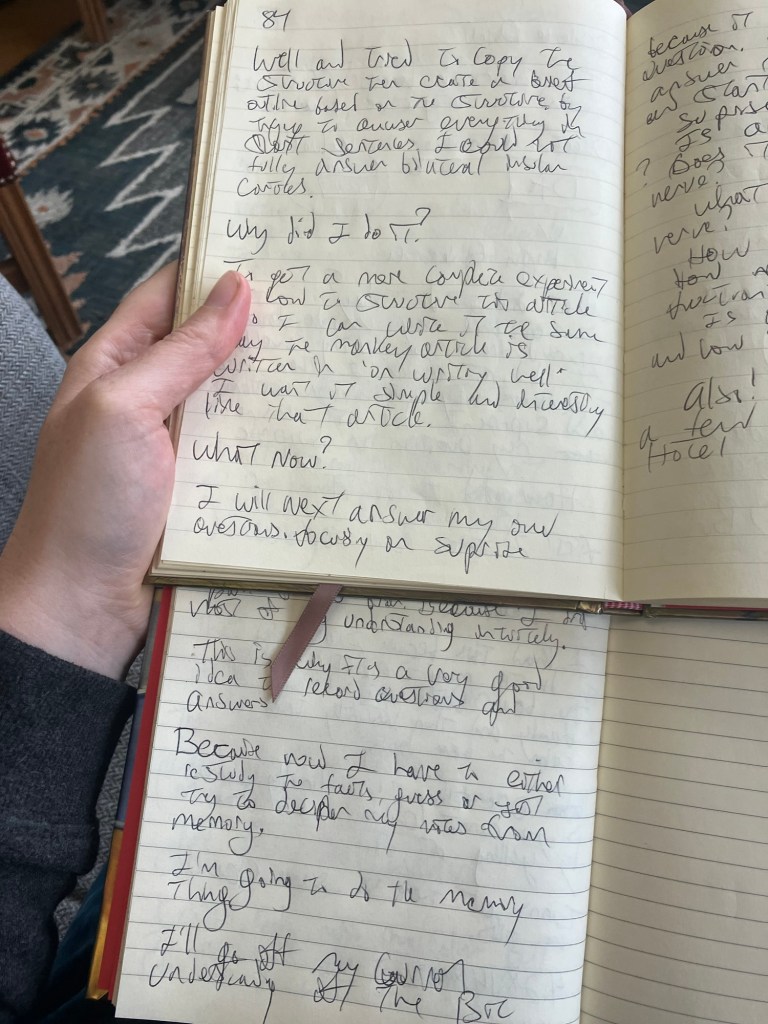
The bilateral insular cortices were the parts of the brain showing activity when there were no visuals it and subjects only listened to ASMR sounds.
The problem for me with this part of the brain is I did not keep a very proper record of what I learned in my notes.
So I either have to restudy everything to fact check my understanding of this part of the brain or just try to decipher what notes I do have and do the rest from memory.
I’m going to do the second one.
I’m going to write out what I gathered from what I read from memory.
It might be total bullshit.
But in the final post on ASMR I’ll go through the long and tedious effort of citing all the papers and fact checking all my information.
By going from my own notes, my own memory, my only relations and my own assumptions I’m giving myself the freedom to think and be wrong instead of enduring the pressure of trying to be correct.

My understanding of the bilateral insular cortices is that it is an area of the brain put to work when sensing and processing feelings and sensations.
My idea of it is that it will turn up feeling. Basically heighten sensations because it’s searching for more information.
It’s the part of the brain linked to empathy. If I’m trying to empathize with a person I’m opening up my senses and letting in more intense feeling.
Why would I do that?
Well, for one. Because I feel very safe. So safe that I can investigate another person’s internal state with even an intent to actually share my resources.
I’m empathizing with them, I want to help them.
What would make me feel that safe?
I bonded with them.
Or I got the safety signals that bonding creates so I’m able to feel that empathy.
One of the studies I made notes for was a study on how the bilateral insular cortices activates when hearing certain soft sounds even in passive listening.
So even when the soft sounds are background noise and not the focus the empathy part of the brain still activates.
Another study I had in my notes was on how damage to this part of the brain is linked to sound agnosia. (Had to look up what the hell agnosia is)
Agnosia is a processing problem. If it’s sight agnosia you can see an object but not identify it. If it’s smell agnosia you can smell the apple pie but not be able to tell it’s apple pie.
If it’s sound agnosia you can hear people speak the language you know and yet not be able to identify the words. (Sounds like something out of a scary science fiction suspense type thing to me)
To help it link together on why this is all relevant, in my notes I also found mentions of a study that linked hearing and emotion.
That we process emotion before context and we process emotion largely from sound.
That’s a tip when it comes to fighting with women.
Emotion before context.
You have to get the safety signals up and running on a person before they can shift out of anger. Which means you have to display signs of social bonding.
Signs of social bonding are soft and slow.
As a very emotional person I’ve very often made the mistake of saying instead of displaying.
Angrily yelling my very logical and incredibly fair point and doubling down on my anger when the person did not understand.
That’s because the mind of another person is not processing my words they are processing my emotions.
They are processing my emotions in an increasingly narrowing frame the more they feel threatened.
Empathy opens. It opens curiosity. It opens perspective. It opens people up to a desire to feel surprise rather than an aversion to it.
One of the most powerful and hardest to resist things a man can do when I’m angry is hug me.
Because it is a display.
Some men have figured this out. All they do is display and because of that they can get away with very devious behavior for quite an extended period of time before they get caught in their malicious intent.
Some men on the other hand have fantastic intentions but they try to logic everything with words and have no idea how to display.

‘There was a chimpanzee in California with a talent for playing ticktacktoe. Its trainers were delighted with this evidence of learning, but they were even more impressed by something else. They found they could tell from the animal’s brain whether any particular move would be right or wrong. It depended on the chimpanzee’s state of attention. When the trained animal was properly attentive, he made the right move.
‘The significant fact was that scientists were able to recognize that state. By elaborate computer analysis of brain wave signals they were learning to distinguish what might be called “states of mind.”
‘This was far more ambitious than simply detecting gross states of arousal, drowsiness or sleep. It was a new step toward understanding how the brain works.
‘The chimpanzee and the research team at the University of California at Los Angeles have graduated from the ticktacktoe stage, but the work with brain waves is continuing. It has already revealed some surprising insights to the brain’s behavior during space flight. It shows promise of application to social and domestic problems on earth and even to improvements in human learning.
‘It is part of the large ferment of modern brain research in progress in laboratories throughout the United States and abroad. Involved are all manner of creatures from men and monkeys to rats and mice, goldfish, flatworms and Japanese quail.
‘The ultimate goal is to understand the human brain—that incredible three-pound package of tissue that can imagine the farthest reaches of the universe and the ultimate core of the atom but cannot fathom its own functioning. Each research project bites off a little piece of an immense puzzle.
‘In the case of the chimpanzee being taught to play ticktacktoe, even the trained eye could see nothing beyond the ordinary in the wavy lines being traced on paper to represent electrical waves from an animal’s brain. But through analysis by computer it was possible to tell which traces showed that the animal was about to make the right move and which preceded a mistake. An important key was the system of computer analysis developed largely by Dr. John Hanley. The state of mind that always foreshadowed a correct answer was one that might be described as trained attentiveness. Without the computer’s ability to analyze the huge complexities of the recorded brain waves, the “signatures” of such states could not have been detected.’
An article William Zinsser used as an example of writing well in his book ‘On writing well’
I included it because I had it recorded in my notes as an example of how I’d like to aspire to write and as an example of how much information can be given to people when something is written well.
 Jess lanai
4 responses to “ASMR: The monkey article”
“Some men on the other hand have fantastic intentions but they try to logic everything with words and have no idea how to display” Sigh! That’s me.
LikeLiked by 1 person
🤣🤣🤣 it’s actually crazy. I used to fight with a friend all the time because I do this too. Makes interactions so much easier when you figure it out. It’s so effective that I noticed guys getting away with murder with me because of this. But noticed i like, get so mad at other guys that aren’t even doing anything bad. 🤣
LikeLiked by 1 person
This post reminded me of when I heard some guy say something along the lines of “You have to talk to women like they’re children” and “Women argue like children” When I first heard this I thought it was mean and condescending however with more life experiences dealing with women and observing adult human behavior in general I now believe that there is a lot of truth in those statements. In dealing with most people and their problems it seems that logical and reason are secondary to emotions but I guess that is part of being human which is why self control is very important.
LikeLiked by 1 person
It’s sort of the same with men when it comes to flirting. Men get really annoyed by very sour looking women that don’t smile but those sour looking women are often kinder. I don’t want to generalize, this has just been my experience.
They’re the type of women that don’t know how to display their emotions and men hate that. They hate it hate it.
When a woman is all smiling and bubbly they like it because of the emotional display. But often those women have just learned how to display their emotions and they use it to get by and works so well.
I’ve even started doing it and it is incredible how much of a difference it makes in men. In women too but women are more skeptical of it and can red flag it.
So men and women are really the same in this. It’s just a human thing
LikeLike